

Filing an Income Tax Return, commonly known as ITR, is an important financial responsibility for taxpayers. Many people think that ITR filing is only required when tax is payable, but ITR filing can be useful in many other situations as well. It helps you maintain a proper financial record, claim tax refund, show income proof and build a stronger financial profile.
Whether you are a salaried person, self-employed professional, business owner, freelancer or investor, filing ITR on time can offer many long-term benefits. It keeps your income details properly recorded with the Income Tax Department and can help you in loans, visas, business growth and financial planning.
In this blog, we will explain the major benefits of filing ITR and why every eligible person should take income tax return filing seriously.
What Is ITR Filing?
ITR filing is the process of submitting your income details, deductions, tax payments, TDS, TCS and other financial information to the Income Tax Department. Through ITR, you declare your income from salary, business, profession, house property, capital gains, interest income or other sources, as applicable.
After filing the return, it is also important to verify it. Once the return is filed and verified successfully, it is processed by the Income Tax Department.
Top Benefits of Filing ITR
Filing ITR is not only about tax compliance. It also gives many practical benefits that can help you in personal finance, loans, business, visa processing and future financial planning.
1. Helps You Claim Income Tax Refund
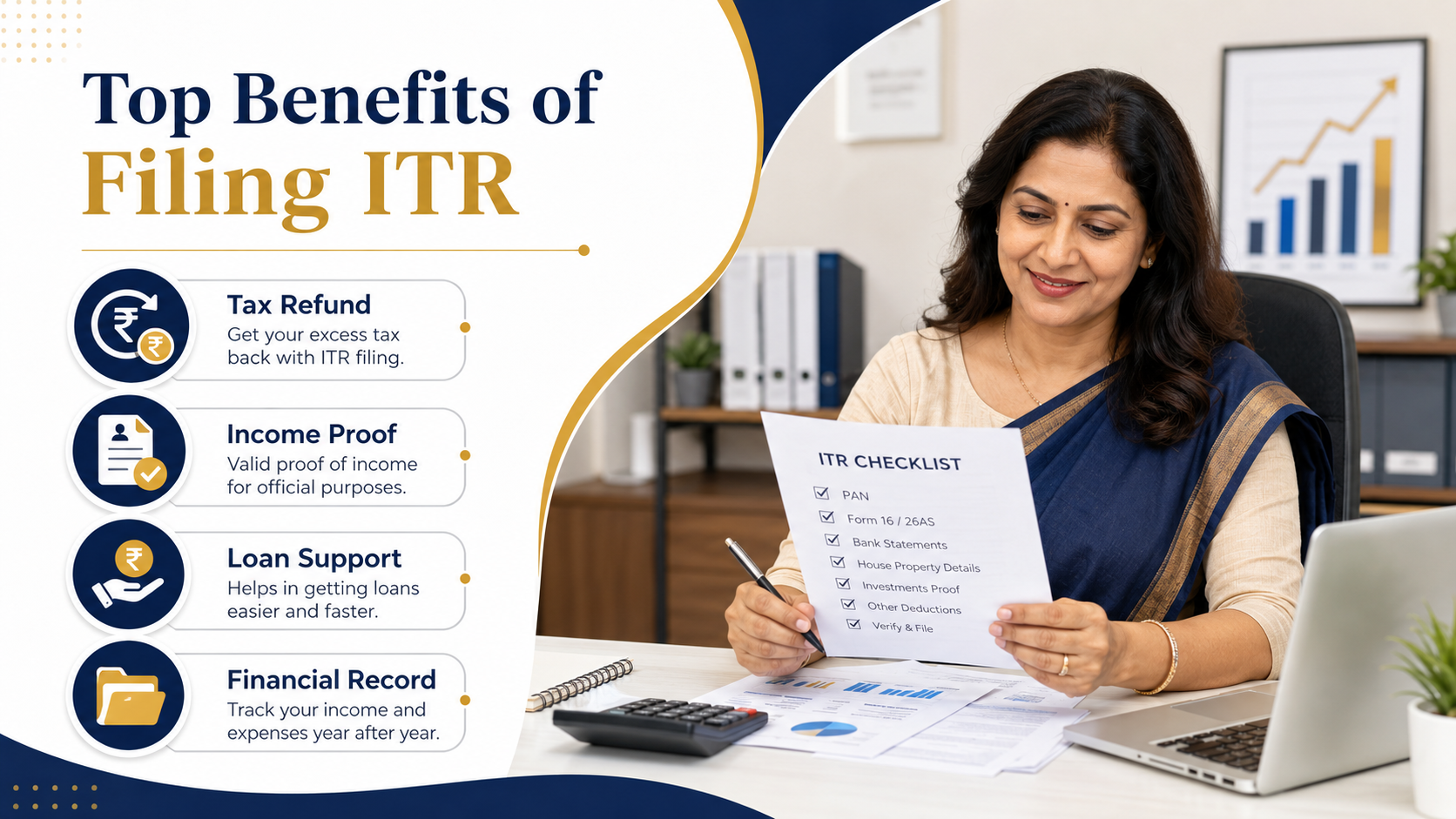
One of the biggest benefits of filing ITR is that it helps you claim an income tax refund. Many times, tax is deducted from your income in the form of TDS. If excess tax has been deducted or your final tax liability is lower than the tax already paid, you may be eligible for a refund.
To claim this refund, filing ITR is necessary. Without filing the return, it may not be possible to claim the excess tax amount back.
2. Works as Official Income Proof
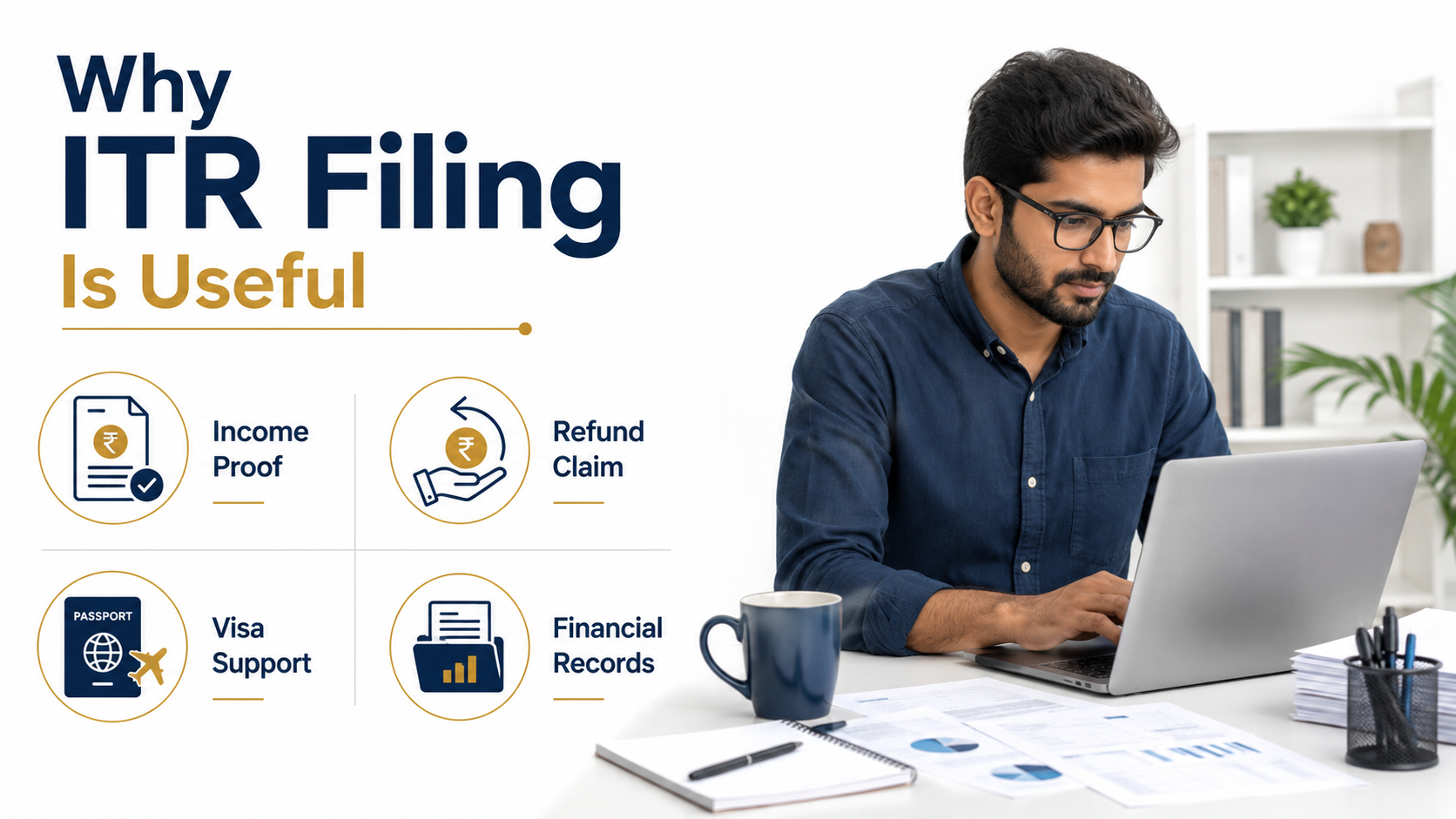
ITR is one of the strongest documents to show your income. It can be useful for salaried individuals, business owners, freelancers and self-employed professionals. Since ITR contains declared income details, many financial institutions consider it an important income proof.
ITR can be useful as income proof for:
- Personal loan application
- Business loan application
- Home loan application
- Vehicle loan application
- Credit card application
- Visa documentation
- Business registration and financial verification
3. Helps in Loan Approval
Banks and NBFCs often check income documents before approving loans. ITR can help lenders understand your income stability, repayment capacity and financial background. For business owners and self-employed individuals, ITR becomes even more important because they may not have salary slips like salaried employees.
Regular ITR filing can make your financial profile stronger and may support your loan application process.

4. Useful for Visa Applications
If you are planning to travel abroad, many embassies and visa authorities may ask for financial documents to check your income and financial stability. ITR can be a helpful document during visa processing because it shows your declared income history.
Filing ITR regularly can make your documentation stronger for travel, study, work or business visa purposes.
5. Helps Carry Forward Certain Losses
If you have losses from business, profession, capital gains or other eligible sources, filing ITR within the applicable timeline can be important for carrying forward certain losses, as per income tax rules.
This can be helpful for taxpayers who want to adjust eligible losses against future income, subject to applicable provisions and conditions.
6. Builds a Proper Financial Record
ITR filing creates a proper record of your income, taxes paid and financial activity. This record can be useful for future financial planning, loan applications, business expansion, investment planning and compliance purposes.
A regular ITR filing history shows that you maintain financial discipline and follow proper tax compliance.
7. Helps Avoid Notices and Compliance Issues
If your income, TDS, high-value transactions or financial activities are reflected in government records but you do not file ITR when required, it may create compliance issues. Filing your return correctly helps you report your income and taxes in a proper manner.
Timely and accurate filing can reduce the chances of unnecessary confusion, mismatch or future queries.
8. Helpful for Self-Employed and Business Owners
For self-employed professionals and business owners, ITR is very important because it shows business income, expenses and declared profit. It can be useful while applying for business loans, government tenders, registrations, financial partnerships or credit facilities.
A business with regular ITR filing may look more reliable and organized in front of lenders and financial institutions.
9. Supports Credit Card and Higher Credit Limit Applications
When applying for a credit card or higher credit limit, the bank may ask for income proof. ITR can support your application by showing your declared income and financial capacity.
This is especially useful for freelancers, consultants, shop owners, traders and other non-salaried applicants.
10. Helps in Property and Financial Transactions
During property purchase, high-value investments or financial transactions, you may need to show income proof and tax records. ITR can help you maintain a clean and clear financial record for such situations.
It also helps in explaining the source of income when required.
Who Should File ITR?
ITR should be filed by individuals, professionals, business owners and other taxpayers who are required to file as per income tax rules. Even in some cases where tax payable is zero, filing ITR can still be useful for refund claim, income proof and financial documentation.
Common categories of people who may need or benefit from ITR filing include:
- Salaried employees
- Self-employed professionals
- Business owners
- Freelancers
- Consultants
- Traders and shop owners
- Individuals with TDS deduction
- Individuals claiming tax refund
- People applying for loans or visas
- Individuals with capital gains or other taxable income
Documents Required for ITR Filing
The documents required for ITR filing depend on your income type and applicable ITR form. However, the following documents are commonly useful.
Basic Documents
- PAN Card
- Aadhaar Card
- Bank account details
- Mobile number linked with Aadhaar
- Email ID
Income Documents
- Form 16 for salaried individuals
- Salary slips, if required
- Bank statements
- Interest income details
- Rental income details, if applicable
- Business income details, if applicable
- Capital gains statement, if applicable
Tax and Deduction Documents
- Form 26AS
- AIS and TIS details
- Tax payment challans
- Investment proofs
- Insurance premium receipts
- Home loan interest certificate, if applicable
- Donation receipts, if applicable
Benefits of Filing ITR on Time
Filing ITR on time gives additional advantages. It keeps your compliance record clean and helps avoid unnecessary delays or penalties, wherever applicable.
- Helps in faster processing of refund
- Reduces chances of late filing issues
- Helps maintain proper financial discipline
- Supports carry forward of eligible losses
- Keeps income records updated
- Makes future loan and visa documentation easier
Common Mistakes to Avoid While Filing ITR
Incorrect ITR filing can create problems later. Make sure you avoid common mistakes while filing your return.
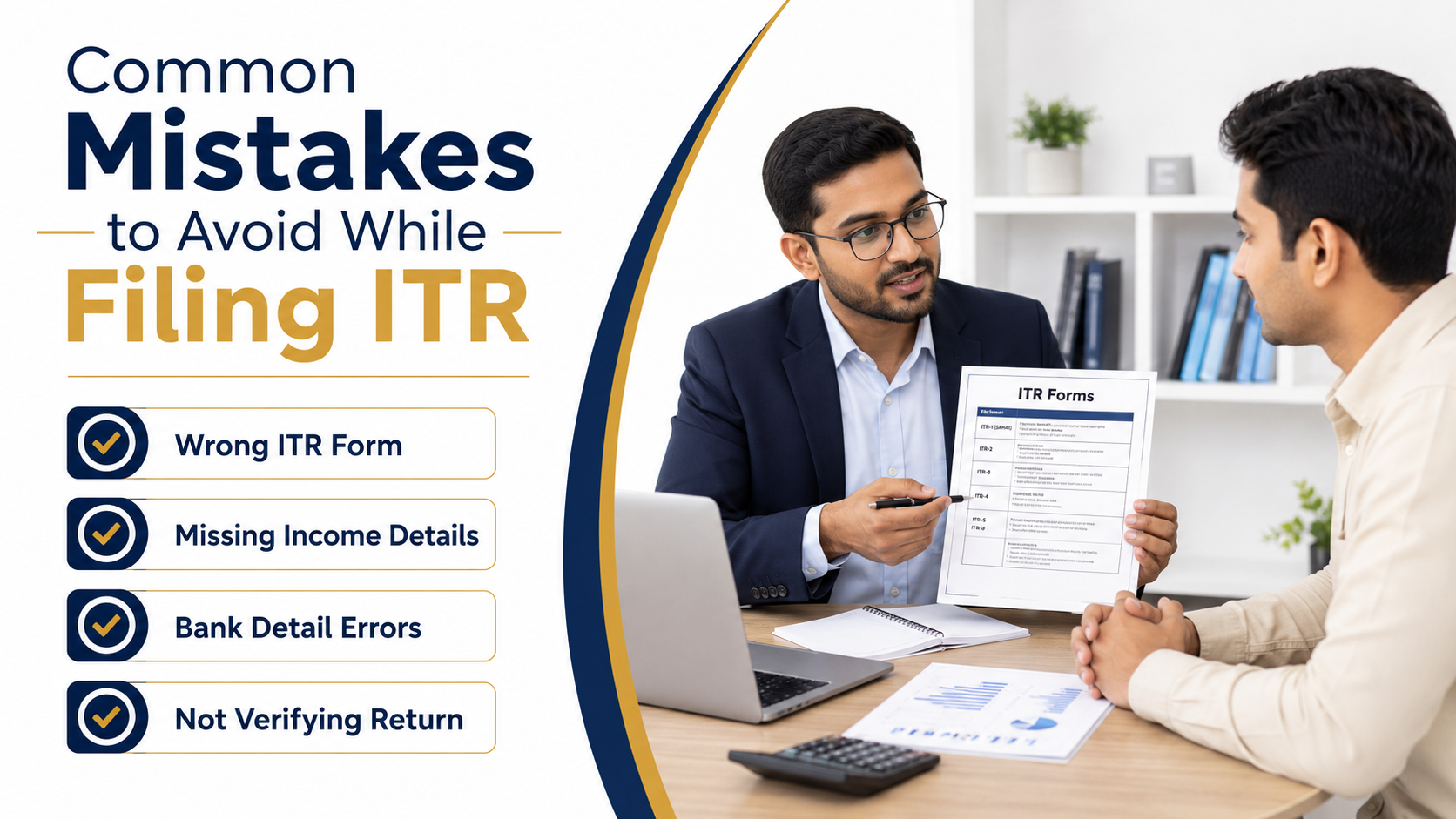
- Selecting the wrong ITR form
- Not reporting all income sources
- Ignoring interest income
- Mismatch in Form 26AS, AIS and actual income
- Wrong bank account details
- Not verifying the return after filing
- Missing eligible deductions
- Filing after the due date without proper reason
Why ITR Filing Is Important Even If Tax Is Not Payable
In some cases, your tax payable may be zero, but filing ITR can still be beneficial. For example, if TDS has been deducted and you are eligible for a refund, you need to file ITR to claim it. Similarly, ITR can be useful as income proof for loans, visas and financial documentation.
Regular filing also creates a financial history that may help you in future financial decisions.
How MoneyMangalam Can Help
MoneyMangalam helps individuals, professionals and business owners with ITR filing support and financial documentation guidance. Our team can help you understand the required documents, select the right filing approach and complete the process smoothly.
We can assist with:
- ITR filing guidance
- Document checklist support
- Income and tax details review
- Refund-related filing support
- Business and professional ITR guidance
- Basic tax compliance assistance
Final tax calculation, refund amount and filing requirements depend on the taxpayer’s income, deductions, tax payments and applicable income tax rules.
Frequently Asked Questions
1. What is ITR filing?
ITR filing is the process of submitting your income, tax, deduction and financial details to the Income Tax Department through the applicable income tax return form.
2. What are the main benefits of filing ITR?
The main benefits include claiming tax refund, using ITR as income proof, supporting loan applications, visa documentation, financial record keeping and compliance.
3. Can I file ITR if my tax payable is zero?
Yes, in many cases you can file ITR even if your tax payable is zero. It can be useful for refund claims, income proof and future financial documentation.
4. Is ITR required for loan applications?
ITR is not always mandatory for every loan, but it is a strong income proof. Many lenders ask for ITR, especially for self-employed applicants and business owners.
5. Can ITR help in visa processing?
Yes, ITR can be useful in visa processing because it helps show your income history and financial stability.
6. What happens if I do not verify my ITR?
Filing the return is not enough; verification is also important. If the return is not verified within the allowed time, it may not be treated as a valid return.
7. Can I claim tax refund without filing ITR?
Generally, to claim an income tax refund, you need to file your ITR and report the tax already deducted or paid.
8. Should salaried employees file ITR?
Salaried employees should file ITR if they are required to do so as per income tax rules or if they want to claim refund, maintain income proof or keep financial records updated.
Conclusion
Filing ITR is not just a tax-related task; it is an important part of financial planning. It helps you claim refunds, maintain income proof, support loan and visa applications, carry forward eligible losses and keep your financial record clean.
If you want smooth ITR filing support, proper document guidance and better financial record management, MoneyMangalam can help you with the process.
Need help with ITR filing? Connect with MoneyMangalam for income tax return filing support and documentation assistance.