
Filing an Income Tax Return, commonly known as ITR, is an important financial and compliance responsibility for taxpayers. Many people think that ITR filing is required only when tax is payable, but this is not always true. Even when your tax payable is zero, filing ITR can be useful for refund claims, income proof, loan applications, visa documentation and financial record keeping.
Not filing ITR can create several problems in the future. It may lead to loss of refund, late filing fee, difficulty in getting loans, problems in visa documentation, compliance issues and loss of financial credibility. For business owners and self-employed professionals, non-filing of ITR can also affect business loan applications and financial verification.
In this blog, we will explain the major losses of not filing ITR and why timely income tax return filing is important.
What Does Non-Filing of ITR Mean?
Non-filing of ITR means not submitting your income tax return when you are required to file it or when it is beneficial for you to file it. ITR filing helps report your income, deductions, tax payments, TDS, TCS and other financial information to the Income Tax Department.
If your income is taxable, tax has been deducted from your income, you want to claim a refund, or you need income proof for financial purposes, not filing ITR can create difficulties.
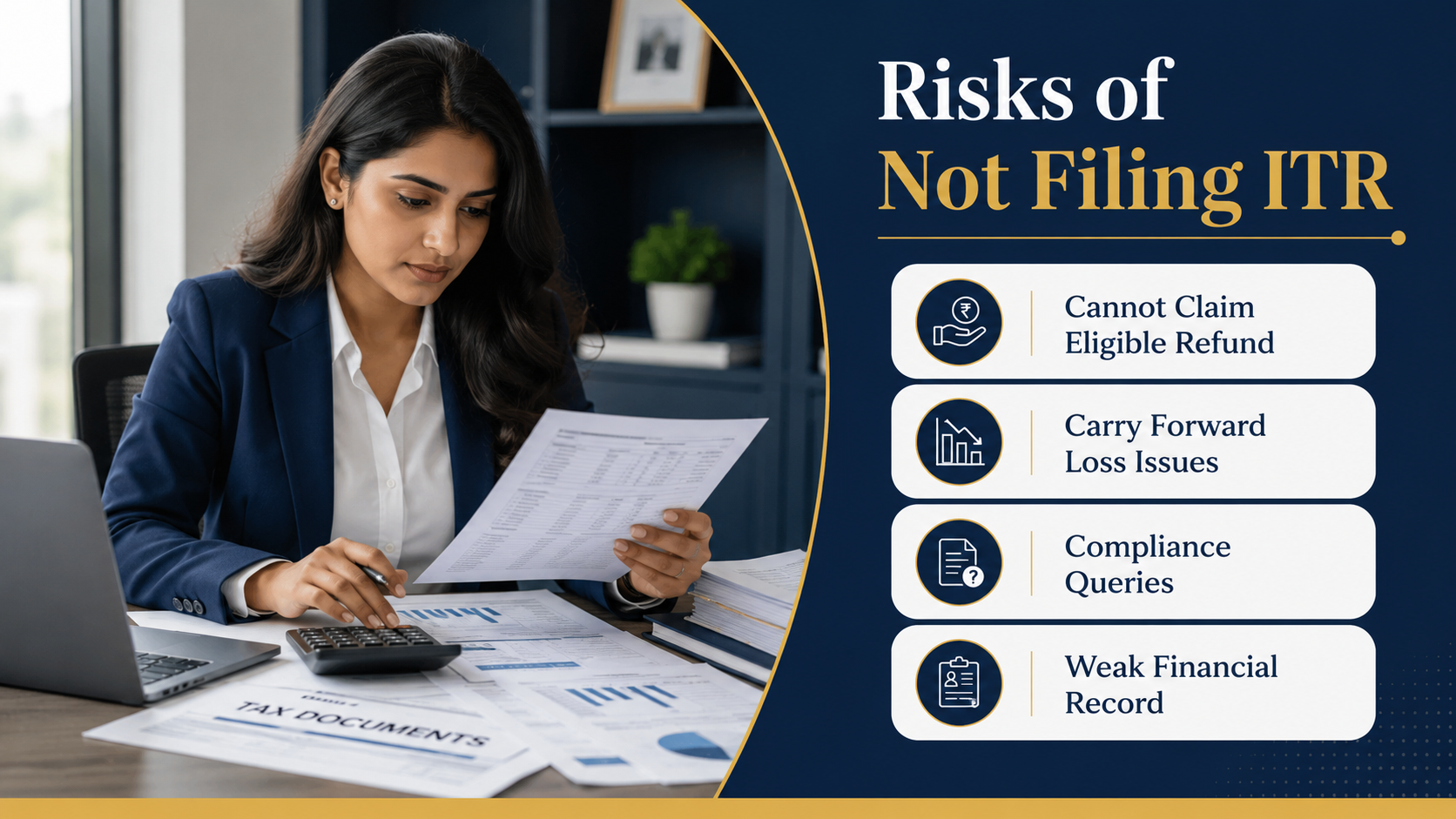
Major Losses of Not Filing ITR
Not filing ITR can affect you in many ways. Some losses are directly related to tax compliance, while others can affect your financial profile and future documentation.
1. You May Lose Your Tax Refund
If excess tax has been deducted from your income through TDS or TCS, you may be eligible for an income tax refund. However, to claim the refund, you generally need to file your ITR.
If you do not file your return, you may not be able to claim the excess tax deducted. This is one of the biggest losses of not filing ITR, especially for salaried employees, freelancers, professionals and people earning interest income.
2. Late Filing Fee May Apply
If you file your ITR after the due date, a late filing fee may apply as per income tax rules. This increases your compliance cost and can be avoided by filing your return on time.
Filing ITR before the due date helps you avoid unnecessary late fee and keeps your tax record clean.
3. Interest and Additional Liability May Increase
If tax is payable and you do not file your return on time, interest and other applicable liabilities may increase. This can make the total amount payable higher than the original tax amount.
Timely filing helps you calculate and clear your tax dues properly.
4. Difficulty in Loan Approval
ITR is an important income proof, especially for self-employed individuals, business owners, freelancers and professionals. Banks and NBFCs may ask for ITR while processing personal loans, business loans, home loans, vehicle loans or credit card applications.
If you do not file ITR regularly, it may become difficult to prove your income and repayment capacity. This can reduce your chances of loan approval or may affect the loan amount offered by the lender.

5. Weak Income Proof for Self-Employed People
Salaried employees usually have salary slips and Form 16, but self-employed individuals and business owners may not have fixed salary documents. For them, ITR is one of the strongest documents to show income.
Not filing ITR can make it difficult to prove business income, professional income or freelance income in front of banks, NBFCs, landlords, embassies or other financial institutions.
6. Problems in Visa Applications
Many visa processes require financial documents to check your income and financial stability. ITR can be useful as a supporting document for travel visa, study visa, work visa or business visa purposes.
If you do not file ITR, your visa documentation may look weak, especially when income proof or financial history is required.
7. You May Not Be Able to Carry Forward Certain Losses
If you have business loss, capital loss or other eligible losses, filing ITR within the applicable due date can be important for carrying forward certain losses. If you do not file your return on time, you may lose the benefit of carrying forward eligible losses to future years, subject to income tax rules.
This can be a major loss for business owners, traders, investors and taxpayers with capital market transactions.
8. Compliance Issues and Future Queries
The Income Tax Department receives information from different sources such as TDS, TCS, AIS, high-value transactions, bank interest, property transactions and other financial records. If your financial activity is visible in records but you do not file ITR when required, it may create mismatch or compliance-related queries.
Filing ITR properly helps you report your income and financial details in a structured way.
9. Difficulty in Getting Credit Cards or Higher Credit Limits
Banks may ask for income proof while issuing a credit card or increasing credit limit. ITR can help show your declared income and financial capacity.
If you do not file ITR, your application for a credit card or higher credit limit may become difficult, especially if you are self-employed or do not have regular salary slips.
10. Weak Financial Record
Regular ITR filing creates a proper financial record of your income, taxes paid and financial discipline. Not filing ITR can create gaps in your financial history.
This can affect future financial planning, loan applications, business expansion, investment documentation and income verification.
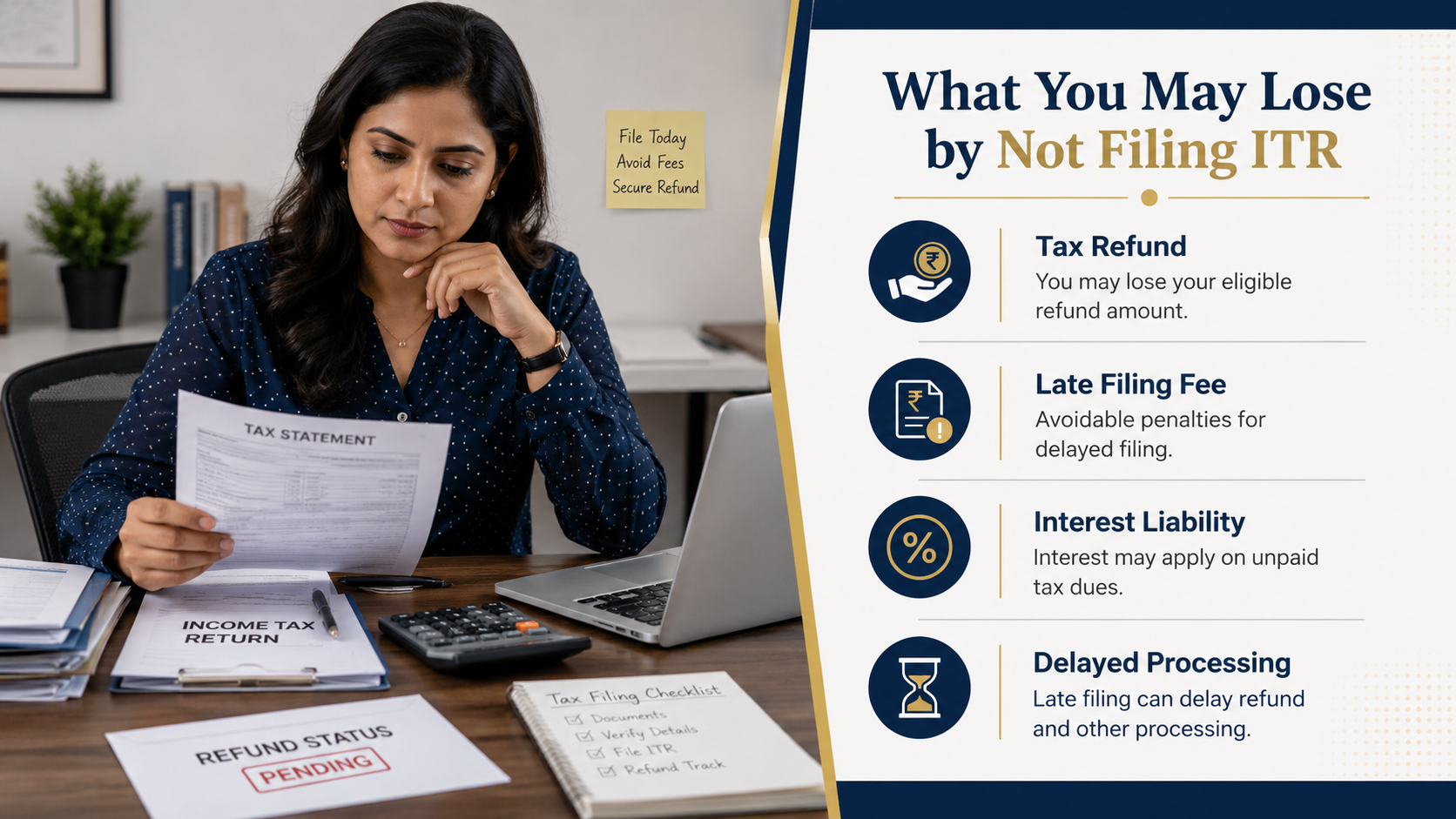
Losses of Not Filing ITR at a Glance
| Loss or Risk | How It Affects You | Best Action |
|---|---|---|
| Loss of Tax Refund | You may not be able to claim excess TDS or TCS deducted | File ITR and claim refund properly |
| Late Filing Fee | Filing after due date may attract late fee | File before the due date |
| Loan Difficulty | Lenders may find it difficult to verify income | Maintain regular ITR filing history |
| Visa Documentation Issue | Financial proof may become weak | Keep ITR records updated |
| Loss Carry Forward Issue | You may lose benefit of carrying forward certain losses | File return within the applicable due date |
| Compliance Queries | Mismatch may arise between income records and tax filing | Report income correctly through ITR |
Who Should Be Careful About ITR Non-Filing?
ITR non-filing can create problems for many types of taxpayers. Some people should be especially careful because they may need ITR for financial or compliance purposes.
- Salaried employees with TDS deduction
- Self-employed professionals
- Business owners
- Freelancers and consultants
- Individuals claiming income tax refund
- People applying for loans
- People applying for visas
- Investors with capital gains or losses
- People with high-value financial transactions
- Individuals with income from multiple sources
Why ITR Is Important Even If Tax Payable Is Zero
Many people do not file ITR because they think no tax is payable. However, ITR filing can still be useful even when your tax payable is zero.
You may still need ITR for:
- Claiming TDS refund
- Maintaining income proof
- Applying for loans
- Applying for visa
- Keeping financial records clean
- Carrying forward eligible losses
- Showing financial discipline
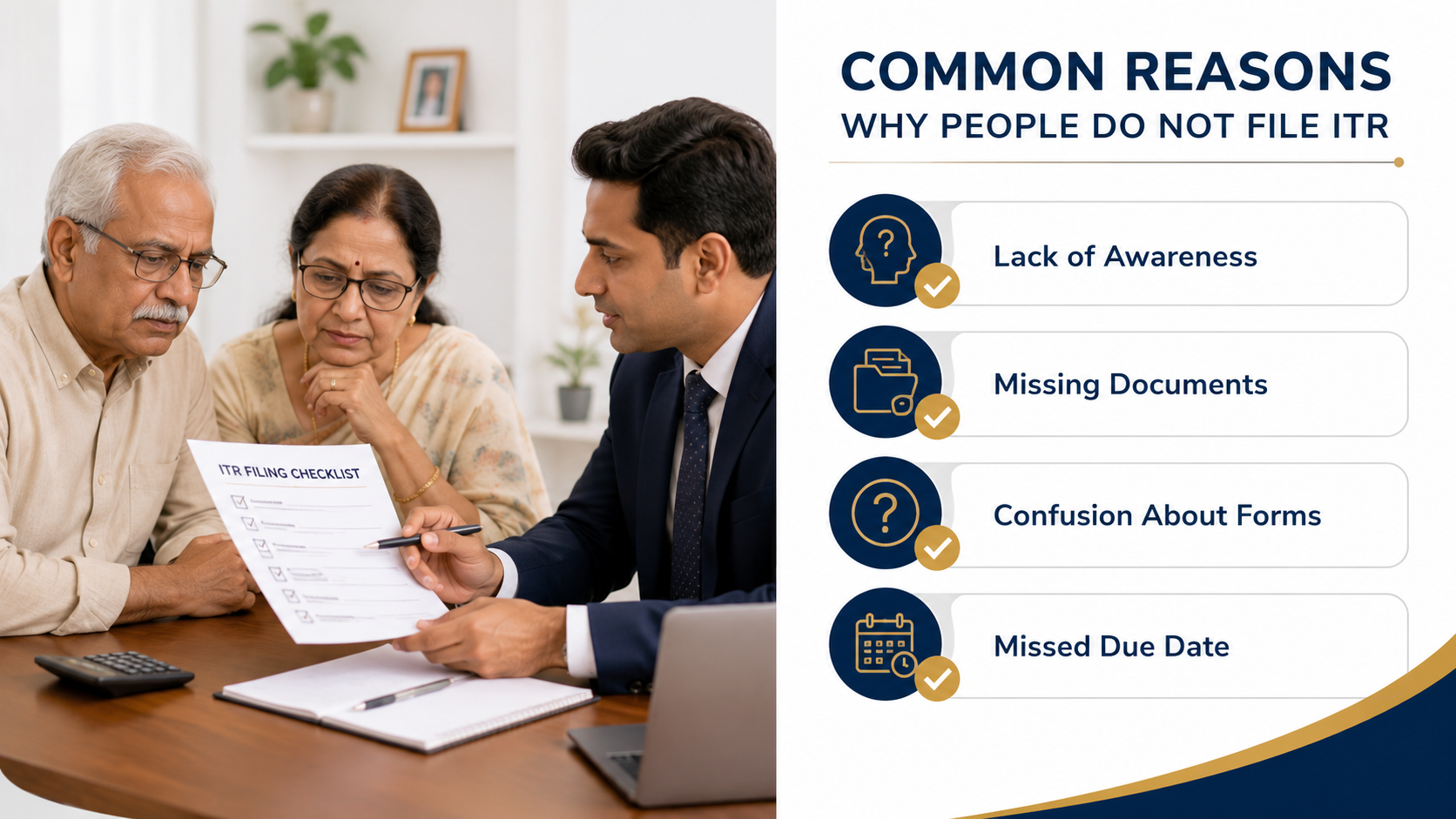
Common Reasons Why People Do Not File ITR
Many taxpayers delay or avoid ITR filing because of confusion, lack of documents or the belief that filing is not necessary. Some common reasons include:
- Thinking that ITR is required only when tax is payable
- Not knowing which ITR form to use
- Not having Form 16 or income details ready
- Confusion about TDS, AIS and Form 26AS
- Missing the due date
- Not understanding refund claim process
- Not verifying the return after filing
What Happens If You File ITR Late?
If you miss the original due date, you may still be able to file a belated return within the allowed timeline, subject to applicable rules. However, late filing may come with certain disadvantages.
- Late filing fee may apply
- Interest may apply if tax is payable
- Refund processing may get delayed
- Carry forward of certain losses may not be allowed
- Your compliance record may not look timely
It is always better to file your ITR before the due date to avoid these issues.
Documents Required for ITR Filing
To avoid non-filing or last-minute delay, keep your documents ready before the due date.
Basic Documents
- PAN Card
- Aadhaar Card
- Bank account details
- Mobile number linked with Aadhaar
- Email ID
Income and Tax Documents
- Form 16, if salaried
- Salary slips, if required
- Bank statements
- Form 26AS
- AIS and TIS details
- Interest income details
- Capital gains statement, if applicable
- Business income details, if applicable
- Tax payment challans, if any
Deduction Documents
- Insurance premium receipts
- Investment proofs
- Home loan interest certificate
- Donation receipts, if applicable
- Medical insurance proof, if applicable
How to Avoid Losses Due to Non-Filing of ITR
You can avoid most ITR non-filing losses by planning early and keeping your documents ready.
- Check whether you are required to file ITR
- Keep PAN, Aadhaar and bank details updated
- Download Form 26AS, AIS and TIS
- Collect salary, business and investment income details
- Check TDS and refund eligibility
- File ITR before the due date
- Verify your ITR after filing
- Take professional help if your income details are complex
Importance of ITR Verification
Filing ITR is not complete until the return is verified. If you upload your return but do not verify it within the allowed time, the return may be treated as invalid.
Therefore, after filing ITR, always complete e-verification or other allowed verification process as applicable.
How MoneyMangalam Can Help
MoneyMangalam helps individuals, professionals and business owners with ITR filing support and financial documentation guidance. Our team can help you understand whether you should file ITR, what documents are required and how to complete the filing process properly.
We can assist with:
- ITR filing guidance
- Document checklist support
- Tax refund filing support
- Income proof documentation
- Business and professional ITR guidance
- Basic tax compliance assistance
Final tax calculation, refund eligibility and filing requirement depend on the taxpayer’s income, deductions, tax payments and applicable income tax rules.
Frequently Asked Questions
1. What are the losses of not filing ITR?
The losses may include loss of tax refund, late filing fee, interest liability, difficulty in loan approval, weak income proof, visa documentation issues, loss carry forward restrictions and compliance queries.
2. Can I claim refund without filing ITR?
Generally, to claim an income tax refund, you need to file your ITR and report the tax already deducted or paid.
3. Is ITR useful for loan applications?
Yes, ITR is a strong income proof and can support personal loan, business loan, home loan, vehicle loan and credit card applications.
4. What happens if I file ITR after the due date?
If you file ITR after the due date, a late filing fee and interest may apply, and you may lose certain benefits such as carry forward of eligible losses, depending on the applicable rules.
5. Is ITR filing required if tax payable is zero?
In some cases, filing ITR may still be useful even if tax payable is zero. It can help in refund claim, income proof, loan application, visa documentation and financial record keeping.
6. What happens if I do not verify my ITR?
If an uploaded ITR is not verified within the allowed time, it may be treated as invalid. Therefore, verification after filing is very important.
7. Can non-filing of ITR affect visa application?
Yes, ITR can be useful as financial proof in many visa processes. Not having ITR may make financial documentation weaker.
8. Can business owners face problems due to non-filing of ITR?
Yes, business owners may face difficulty in business loan applications, financial verification, income proof documentation and compliance if they do not file ITR regularly.
Conclusion
Not filing ITR can create several financial and compliance-related problems. You may lose tax refund, face late filing fee, have difficulty in loan and visa applications, lose the benefit of carrying forward certain losses and create gaps in your financial record.
Timely ITR filing helps you maintain a clean financial profile, claim refund, show income proof and avoid unnecessary compliance issues. Even if your tax payable is zero, filing ITR can still be useful for future financial needs.
Need help with ITR filing? Connect with MoneyMangalam for income tax return filing support and documentation assistance.